
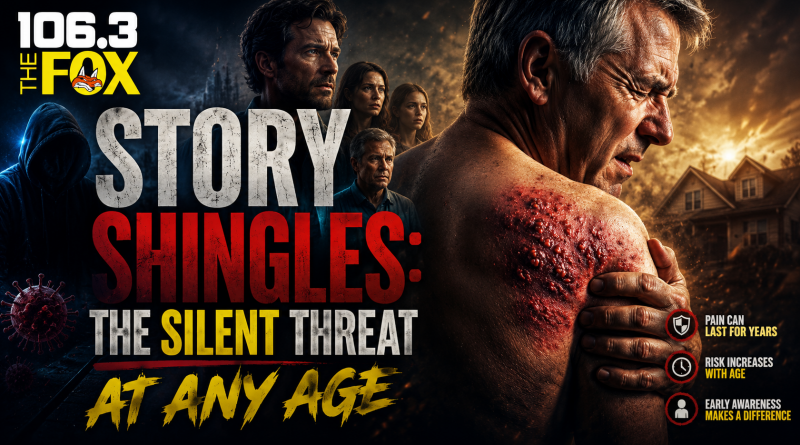
Shingles isn’t just hitting seniors anymore. ⚠️
Story: Shingles — The Silent Threat at Any Age
Most people think shingles is something that only affects grandparents.
 Turns out… that’s not true anymore.
A young music star recently opened up about battling the painful viral infection, shining a spotlight on a health problem doctors say is quietly hitting younger adults more often than ever before.
Shingles is caused by the varicella-zoster virus — the same virus responsible for chickenpox. After someone recovers from chickenpox, the virus doesn’t completely leave the body. Instead, it stays dormant in the nervous system and can reactivate years later as shingles.
And it’s more common than many people realize.
About 1 million Americans develop shingles every year, and experts estimate one in three people will experience it at some point during their lifetime.
What’s surprising is the age shift.
While the risk still increases after age 50, nearly half of shingles cases now occur in adults younger than 60. Cases among people in their 30s and 40s have also been steadily rising over the past two decades.
Doctors believe several factors may contribute to flare-ups, including:
- Stress
- Illness
- Aging
- Certain medications
- Weakened immune systems
Research also shows people with conditions such as diabetes, asthma, autoimmune disorders, and even depression may face a higher risk.
The symptoms can be brutal.
Shingles often begins with burning pain, tingling, or sensitivity before a blistering rash appears. In some cases, nerve pain can linger for months — or even years — after the rash disappears.
 Health experts say awareness is key because many younger adults simply don’t think it could happen to them.
Vaccination remains one of the most effective ways to reduce the risk. The shingles vaccine is recommended for adults 50 and older, along with younger immunocompromised adults.
One major reason younger generations may eventually see lower rates? The chickenpox vaccine introduced in 1995. Studies suggest vaccinated individuals are significantly less likely to develop shingles later in life.
Bottom line:
Shingles isn’t just an “older person” problem anymore — and knowing the warning signs could make a major difference.