
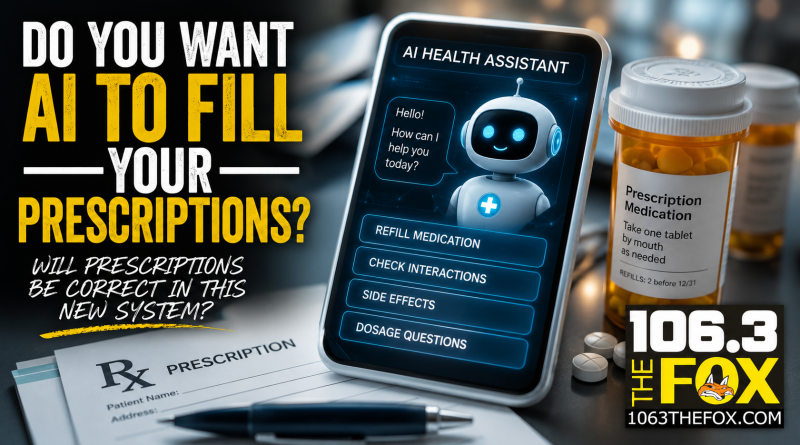
Would You Trust AI to Refill Your Prescription?
 Artificial intelligence is writing emails.
It’s helping students with homework.
It’s even planning vacations.
Now it’s starting to play a role in something much more personal—your prescription medications.
A new program called Doctronic is being tested in Utah, allowing some residents to request prescription refills through an AI chatbot rather than starting with a traditional doctor’s appointment.
The idea is simple: if you’re taking a medication you’ve already been prescribed, AI could help speed up the refill process, making healthcare more convenient and reducing wait times.
But that’s where the debate begins.
 Supporters believe artificial intelligence can handle many routine healthcare tasks, especially when paired with oversight from licensed physicians. In Utah’s program, refill requests are still reviewed by a human doctor before they’re approved.
Critics, however, worry that medicine is too complicated to hand over to software. Even routine prescriptions can involve changing medical conditions, unexpected side effects, allergies, or drug interactions that require careful human judgment.
The program has already sparked discussions among doctors, lawmakers, and patient advocates about how much responsibility AI should have in healthcare—and where the line should be drawn.
 One thing seems certain: AI isn’t going away.
From scheduling appointments to reviewing medical records and assisting doctors with paperwork, artificial intelligence is becoming part of modern healthcare faster than many people expected.
The bigger question isn’t whether AI will be involved.
It’s how much we want it involved.
What Do You Think?
Would you be comfortable using AI to help refill a prescription if a licensed doctor still reviewed and approved it?
Or is healthcare one area where you’d rather deal with a real person from start to finish?