
What triggers a snow emergency?
What triggers a snow emergency? Wood County sheriff explains
 WOOD COUNTY, Ohio — Wood County Sheriff Mark Wasylyshyn says declaring a snow advisory or emergency is never a quick or casual decision. As winter weather moves in, he says he pays close attention to conditions on the ground.
“I can feel the increase in the wind, this light powdery snow. I think there are going to be a lot of cancellations and delays tomorrow,” Wasylyshyn said on Monday.
He says issuing a snow emergency carries real consequences for residents.
“I’m taking away a privilege of somebody being able to check on a relative, to be able to check on someone who’s homebound, maybe needs to get some medicine,” he said. “If it’s a Level 3, you’re not to be on the road unless you’re an essential employee.”
Snow emergency levels were created decades ago, in part because of lessons learned from the Blizzard of 1978, when warnings alone weren’t enough to keep people off the roads. Flat terrain, strong winds and whiteout conditions made travel dangerous almost immediately, leaving thousands without power.

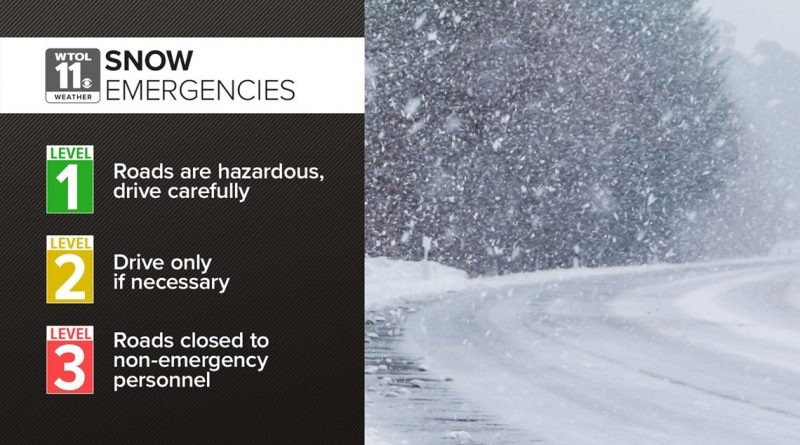
Today, Ohio’s three‑level snow emergency system gives sheriffs the authority to restrict travel, keep plow crews moving and protect first responders.
- Level 1: Roads are icy or snow‑covered; drivers should use caution.
- Level 2: Conditions are hazardous and travel is discouraged.
- Level 3: Roads are closed to nonessential travel.