
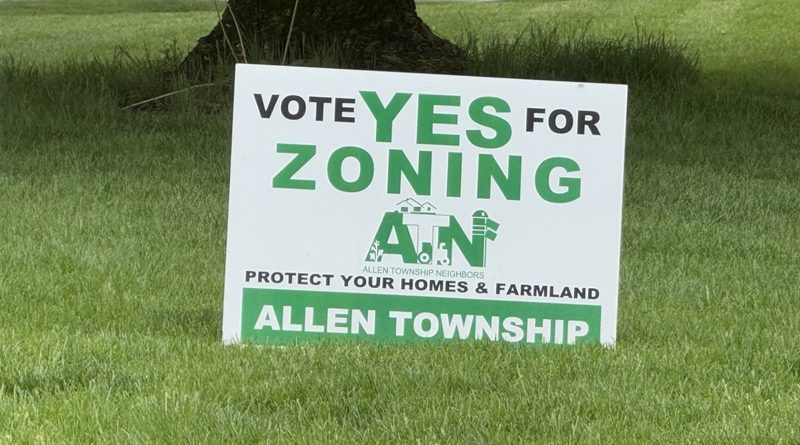
Allen Township Zoning Resolution Passes Easily
Residents of Allen Township, Hancock County decided on a Proposed Zoning Plan in the Primary Election.
Unofficial results from the Hancock County Board of Elections show the issue passing in resounding fashion with 69 percent of the vote.
502 people voted for it, while 221 voted against.
This was the second vote on a zoning plan in as many years.
Last May, voters approved a measure to establish zoning in the township but a court threw out the vote, with a judge determining the abbreviated ballot language used did not fully convey the meaning of the zoning measure.
Supporters of the zoning initiative say it will protect their homes and farmland.
The ballot language is below.
Allen Township (Unincorporated Area)
Proposed Zoning Plan
A Resolution enacted under Section 519 of the Ohio Revised Code, titled “Township Zoning”, governing the unincorporated area of Allen Township, Hancock County, Ohio, to regulate the location and use of buildings, structures and lands for agriculture, trade, industry, residence and for public and semipublic or other specified uses; and to regulate and limit the height and area of structures; to regulate and to determine the size of yards and open spaces; to limit the density of population; and for these purposes to divide the Township into districts and establishing the boundaries thereof; providing for changes in the regulations, restrictions and boundaries of such districts, defining certain terms used herein; providing for enforcement; establishing a Board of Zoning Appeals; and imposing penalties for the violation of this Resolution.
Pursuant to the authority conferred by Section 519 of the Ohio Revised Code, and for the purpose of promoting, and protecting the public health, safety, and general welfare of the inhabitants of Allen Township, by protecting and preserving agricultural land as a nonrenewable resource, by protecting and conserving the character and social and economic stability of the agricultural, residential, commercial, industrial and other use areas; by securing the most appropriate use of land; preventing overcrowding of the land and undue congestion of population; providing adequate light, air and reasonable access; and facilitating adequate and economical provision of schools, recreation and other public requirements, and by other means, all in accordance with a Comprehensive Land Use Plan.